
Why Your Lawn Looks Patchy and What to Check First

A practical UK lawn diagnosis before you waste money on quick fixes.
It's not as bad as it looks: most patchy lawns are not ruined. They are usually tired, compacted, shaded, hungry, or being cut at the wrong moment. That is good news, because it means a homeowner can stop guessing and start following a simple recovery plan.
The quick answer
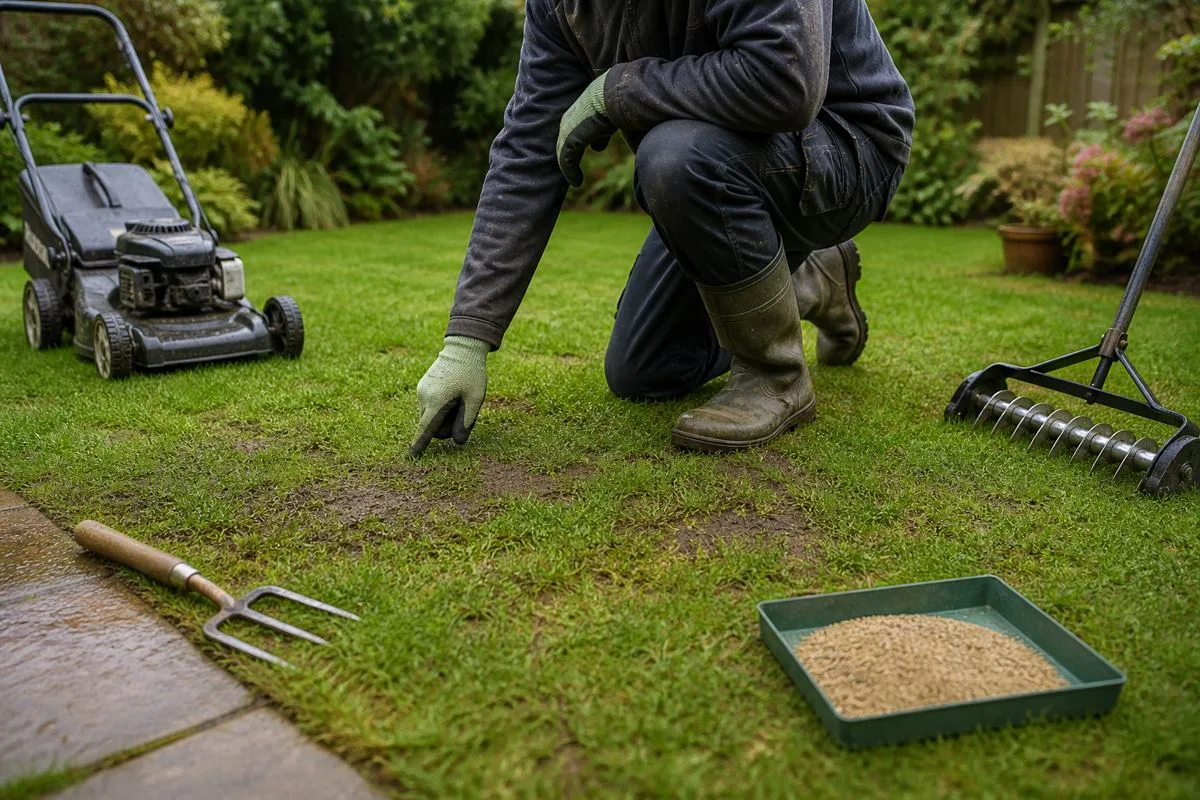
If a UK lawn looks thin, yellow, mossy or uneven after winter, the safest first move is not to throw fertiliser at it. Start by clearing debris, checking drainage, lifting the mowing height, and identifying whether the problem is moss, compaction, shade or bare soil. Once the lawn is actively growing, you can repair patches with seed, lightly feed, and improve airflow through scarifying or aeration where needed.
Why lawns go patchy in the first place
A lawn is a living surface, not a carpet. It reacts to weather, foot traffic, pets, shade, poor soil and over-enthusiastic mowing. In the UK, the awkward mix of wet winters, mild spells and short daylight can leave grass weak while moss and weeds keep ticking along.
That is why the same patch can look like three different problems: yellow grass, spongy moss and muddy gaps. Treating only the visible symptom often wastes time. The better question is: what stopped the grass thriving here?
Do not treat a patchy lawn like a painting job. Treat it like a small diagnosis: light, water, soil, cut height, wear and timing.
A simple five-minute lawn check
- Look for standing water. If the ground stays wet long after rain, drainage and compaction matter more than feeding.
- Push a garden fork into the soil. If it is hard work, roots may be struggling for air.
- Check the shade line. Thin grass under fences, trees and buildings may need shade-tolerant seed or a different maintenance expectation.
- Measure the mowing height. Scalping weak grass makes patches worse.
- Separate moss from bare soil. Moss suggests damp, shade, acidity, thatch or weak grass. Bare soil suggests wear, pests, drought stress or poor establishment.
Patchy lawn causes and first fixes
| What you see | Likely cause | First sensible move |
|---|---|---|
| Spongy green moss | Damp, shade, thatch or weak grass | Improve airflow and plan scarifying when growth is strong |
| Hard bare tracks | Compaction from feet, pets or wheels | Aerate and rest the area before reseeding |
| Yellow weak grass | Stress, low nutrients or poor cutting | Raise mower height and feed only when conditions suit |
| Thin shaded strips | Low light and moisture competition | Use shade seed or change the planting plan |
When to scarify, aerate or reseed
Scarifying removes moss and thatch, but it can look brutal for a week or two. Aeration opens compacted soil so air and water can move. Reseeding fills the gaps, but only if the seed has contact with soil, moisture and enough warmth to germinate.
For many UK gardens, spring and early autumn are the best repair windows. The soil is usually moist, the weather is not too extreme, and grass has enough growth energy to recover. Avoid heavy repair work during drought, frost, water-logging or when the lawn is barely growing.
The mistake that makes patches worse
The most common mistake is cutting too short because the lawn looks untidy. Short mowing can expose soil, weaken the plant and give moss or weeds more room. A slightly higher cut is often the fastest visual improvement because it helps the grass shade its own roots and rebuild leaf strength.
A better first-week plan
- Clear sticks, leaves and debris.
- Mow lightly only if the grass is dry enough and actively growing.
- Raise the mower height instead of chasing a bowling-green finish.
- Mark the worst patches and check whether each one is wet, shaded, compacted or worn.
- Book repair work for a proper growing window rather than forcing it during bad conditions.
When to call a lawn care professional
A homeowner can do plenty: raise the cut, tidy the surface, water seed correctly and stop mowing wet ground. A professional becomes useful when the cause is not obvious, the lawn needs mechanical scarifying or aeration, or the garden needs a repeatable seasonal plan rather than one-off rescue attempts.
That is exactly why Shear Power is building a better lawn care directory: homeowners need practical local help, and good gardeners need a cleaner way to be found.
Final takeaway
A patchy lawn is usually a message, not a disaster. Read the message first. If it is wet, improve air and drainage. If it is hard, aerate. If it is bare, prepare soil before seed. If it is shaded, choose the right grass or change expectations. The magic is not one product; it is timing, diagnosis and steady maintenance.
Homeowner next step: use Shear Power to find reliable local lawn care and garden maintenance help as the directory grows.
Gardener next step: if you run a real lawn care or gardening business, Shear Power will soon be inviting operators to join the directory and apply for featured local listings.