
What to do when a lawn stays muddy after every rain
A plain UK homeowner guide to muddy lawns, drainage clues and safer lawn repair timing.
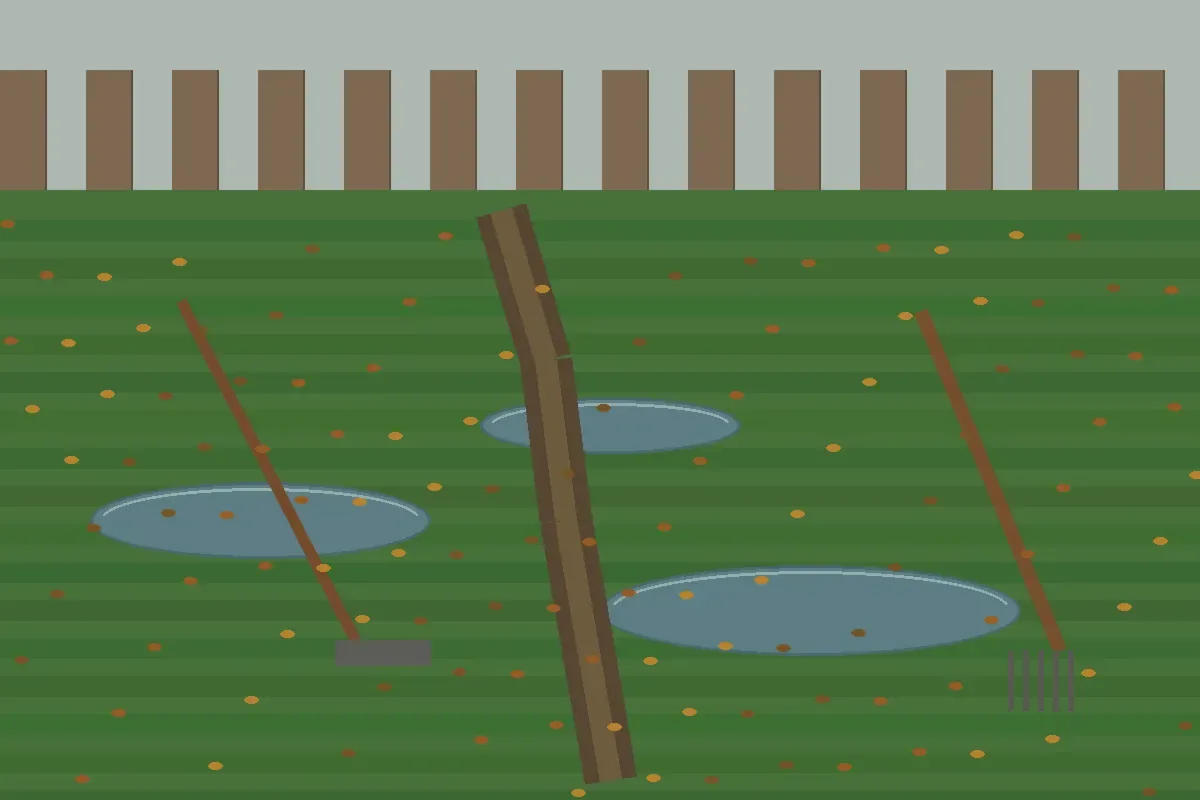
If a lawn stays muddy after every spell of rain, the problem is usually not the rain on its own. The rain is showing you where the lawn is already struggling: compacted soil, a worn walking route, blocked edges, heavy clay, poor levels, or thatch and moss holding moisture near the surface.
Quick answer
Keep weight off the lawn while it is soft, clear leaves and blocked edges, then check where the mud keeps returning. If the surface smears like paste under your shoe or hand fork, wait. Mowing, scarifying, feeding or seeding at that point can press the soil tighter and leave ruts that last into spring.
Start with the evidence, not the cure
A muddy lawn is easy to misread. Homeowners often jump straight to seed because the grass looks thin, but seed will not fix standing water, shade, compaction or a low spot. Spend ten minutes after rain looking at the pattern.
| What you see | What it may mean | First safe move |
|---|---|---|
| Water sitting near the patio or path | Blocked edge, poor fall, or soil built up against hard surfaces | Clear leaves and silt from the edge and watch the next rainfall |
| A muddy line to the shed, bin or gate | Repeated foot traffic on soft ground | Stop using that route for now, or lay temporary boards if access is needed |
| Squashy, dark grass with moss | Shade, poor airflow, low nutrition, wet soil, or several of these together | Check light, drainage and compaction before buying moss killer |
| Thin patches where children, pets or furniture sit | Wear plus compaction | Keep traffic off until firm, then plan repair when conditions allow |
The hand-fork test
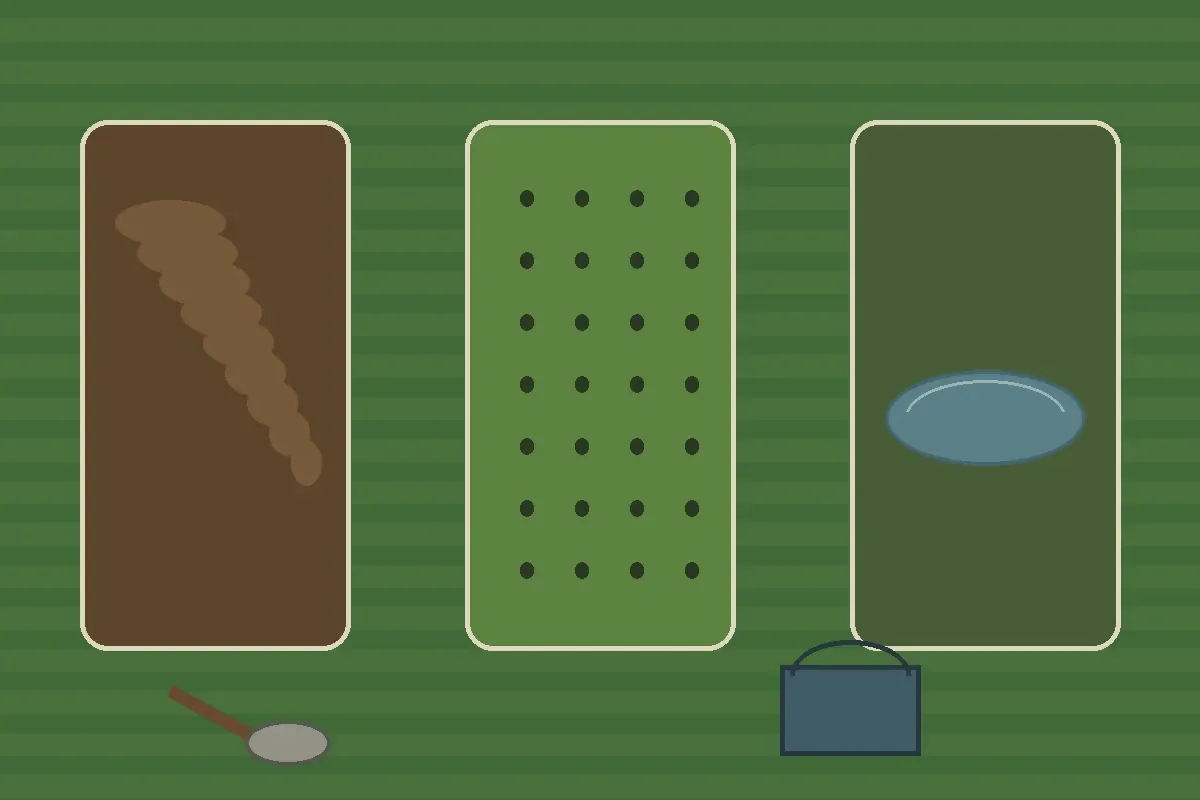
Push a hand fork into the muddy area and lift a small amount of soil. You are not digging the lawn up. You are checking texture. If the soil opens in crumbly pieces, the surface may be firming up. If it comes up as a shiny smear, leave it alone. That shiny smear is the warning sign.
On heavy clay, this is especially important. Clay lawns can recover well, but they punish impatient work. Spiking, hollow-tine aeration and top dressing all need the right timing. Done when the ground is too wet, the work can polish the sides of holes or churn the top into a mess.
Check the boring edges first
Before blaming the whole lawn, look at the boundaries. Leaves can dam water against a path. Soil can creep over a patio edge. Gutters, channels and low flower bed edges can send water across one strip of grass. A tidy edge will not solve every drainage problem, but it removes the easy causes first.
Also look for a route problem. If everyone cuts across the same wet corner to reach the bin, the lawn is not failing evenly. It is being walked into mud. In that case, the repair is part lawn care and part habit change. A stepping-stone route or a short path may do more good than another bag of seed.
What not to do while it is soft
- Do not mow if the mower sinks, slips or leaves wheel marks.
- Do not scarify a wet, smeary lawn. It can tear grass out and roughen the surface.
- Do not throw seed onto mud and hope for the best. Birds, puddles and cold nights may waste it.
- Do not keep testing the same patch by walking on it every day.
- Do not add random soil to a low area without checking where the water will go next.
When aeration may help
Aeration can help a compacted lawn because it opens channels for air and water movement around the roots. Hollow-tine aeration is often better for heavy, compacted ground because it removes plugs rather than just pushing soil aside. The catch is timing. The surface should be moist enough to work, but not waterlogged, frozen or smeary.
The RHS has useful plain guidance on waterlogged lawns and autumn lawn care. If you want a source to keep handy, start with RHS advice on lawn waterlogging and RHS autumn lawn care.
When to call someone in
Call a professional if water sits for days, the lawn slopes toward the house, the muddy area keeps returning in the same place, or you suspect a drainage, level or hard-landscaping issue. Also get help if the lawn needs machine aeration, heavy waste removal, or repair across a large area. A good gardener should ask for photos after rainfall, not just a close-up of the worst patch.
A practical next step
Take three photos: one wide view of the garden, one close-up of the mud, and one showing where water sits beside paths, patios or borders. Note how long the water remains after rain. You can use Shear Power to compare local gardeners and lawn care help, then send those photos before booking. The clearer the evidence, the less chance of paying for the wrong fix.