
Is your lawn too wet to mow this week?
A plain UK homeowner checklist for deciding whether wet grass should wait.
If the grass is wet but the soil underneath is firm, you may be able to mow carefully on a higher setting. If the ground is soft, sticky, shiny with surface water, or leaving wheel marks under light pressure, leave it alone for now. A late cut is better than a mower rut that stays visible all winter.
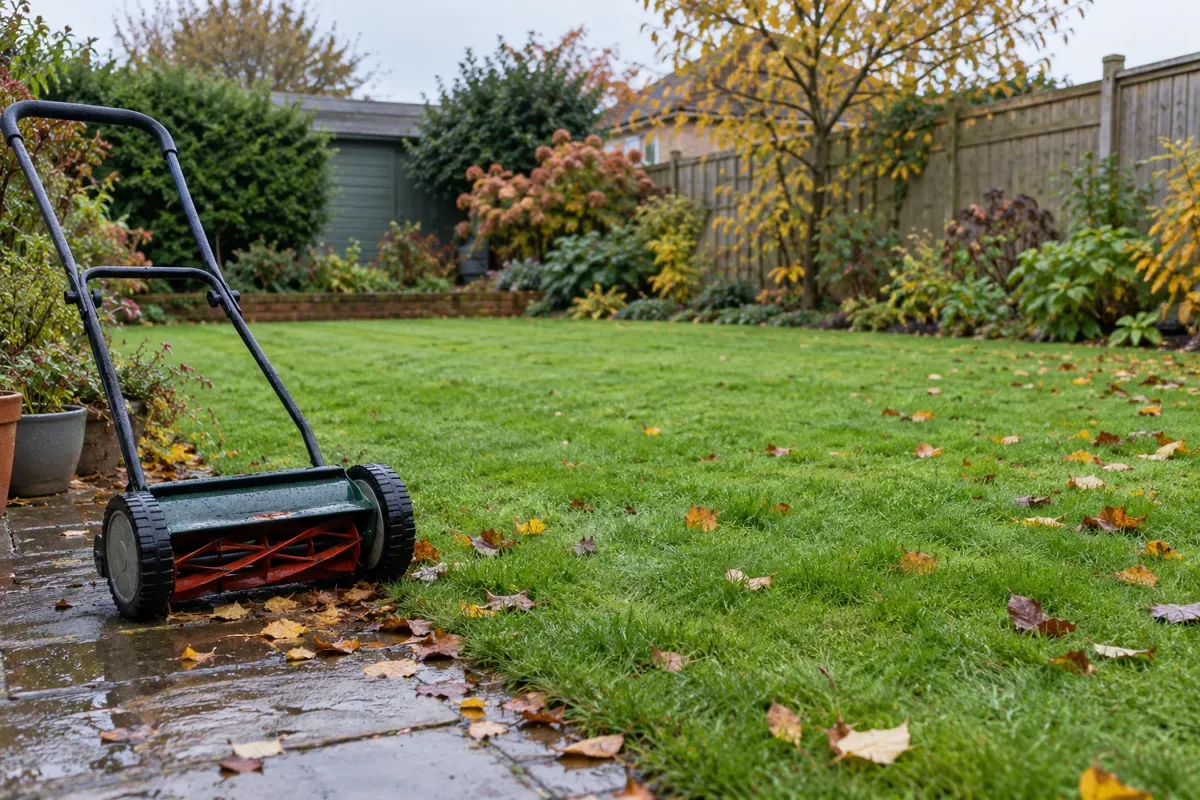
The quick wet lawn test
Before you get the mower out, walk to the edge of the lawn and press your boot down. You are not trying to stamp holes in it. You are checking how the soil behaves under normal weight.
- If your boot comes away clean and the grass springs back, the lawn may only be damp on top.
- If your boot sinks, twists, or brings mud with it, the soil is too soft for mowing.
- If water shines on the surface or sits in low patches, wait for a drier window.
- If the grass folds flat and stays flat, the cut will probably be messy.
The RHS mowing advice is sensible here: grass should be dry enough for a clean cut, and very wet soil can compact and turn muddy along wheel ruts. That is the bit many homeowners miss. The problem is not only wet blades of grass. It is the ground carrying the mower.
What your lawn is telling you
| What you see | Likely meaning | Bruno's call |
|---|---|---|
| Wet grass, firm soil | Surface moisture after dew or a light shower | Wait if you can. If it must be done, mow high and slow. |
| Mower wheels leave lines | Soil is soft below the grass | Stop. The lawn needs drying time. |
| Clippings clump under the mower | The grass is too wet for a clean cut | Pause and clear safely with the mower off. |
| Boot prints fill with water | Waterlogging or heavy compaction | Do not mow. Look at drainage and aeration later. |
| Long grass lying over after rain | Growth needs managing, but timing matters | Wait for a dry spell, then take a light cut. |
Why mowing wet ground causes trouble
A mower is heavier than it looks once it is rolling over soft soil. Wheels can press tracks into the lawn, especially on clay, shaded areas, and low spots near patios. Those tracks collect more water, the grass thins, and moss often finds the weak places first.
Wet grass also tears more easily. Instead of a clean cut, the blades can bruise and look ragged. The mower deck clogs faster, which makes the machine work harder and leaves lumpy clippings behind. Those clumps can smother patches if they are left sitting on the lawn.
There is a safety side too. Slippery grass, trailing leads, slopes, and a blocked mower are a bad mix. If you need to clear a blockage, switch the machine off, disconnect the power or spark plug where relevant, and keep hands away from blades. If that sounds over the top, good. Mowers deserve a bit of respect.
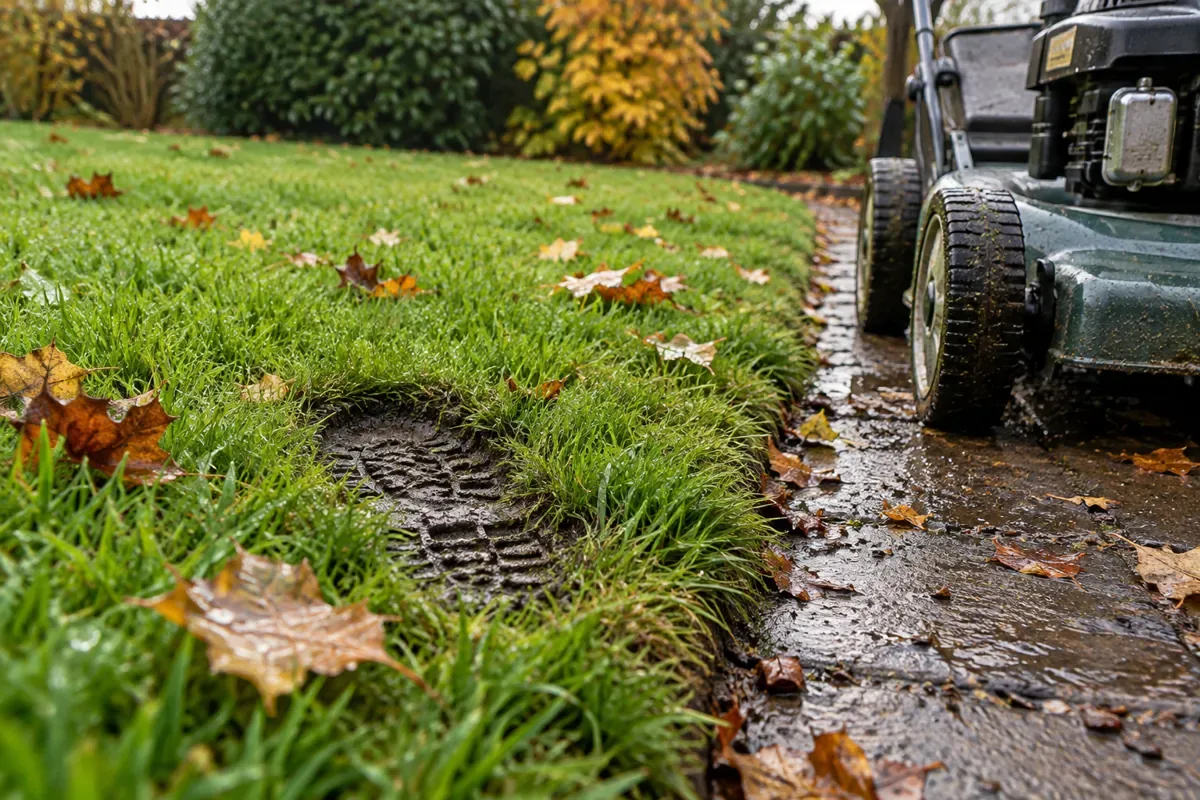
If you cannot leave it much longer
Sometimes the lawn is getting long and you know another week of rain is coming. In that case, pick the best part of the day rather than the first free half hour. Late morning or early afternoon often gives the grass more chance to dry after dew, though autumn weather does what it likes.
Use a higher cut than normal. You are tidying the top, not trying to scalp the lawn before winter. Empty the collection box more often so wet clippings do not drag the mower down. Avoid tight turns on soft corners, and do not keep going if the wheels start marking the lawn.
If you use a lawn mowing service near me search because you want it handled, tell the gardener what the ground is like before they arrive. A decent gardener would rather move the visit than damage the lawn and pretend it was unavoidable.
When to call someone in
Call a gardener or lawn care professional if wet patches keep coming back in the same places, the lawn stays spongy for days after rain, or every cut leaves muddy tracks. That can point to compaction, thatch, shade, poor levels, heavy clay, or drainage trouble. The fix might be as simple as changing the mowing rhythm, but it might need aeration or a bigger lawn care plan.
Do not rush into seed, feed, scarifying, or aeration just because the lawn looks miserable after rain. Wet conditions can make good jobs go badly. A practical pair of eyes on site can save wasted effort.
A simple call for this week
- Mow if the soil is firm, the grass is only lightly damp, and the mower cuts cleanly.
- Wait if the ground is soft, slippery, or marking under your feet.
- Book help if the same wet areas keep spoiling the lawn.
If you are not sure whether to wait, Shear Power can help you compare local lawn mowing and garden maintenance options. Send clear photos of the lawn, the wettest patch, access, and any mower tracks. A gardener can give better advice when they can see the ground they are being asked to work on.