
How often should you mow the lawn in late summer?

A plain UK guide to late summer mowing rhythm, height and when to leave grass alone.
Quick answer: in late summer, most UK lawns need mowing about once a week while they are still growing well. In a hot, dry spell, stretch that to every 10 to 14 days or pause until the grass starts growing again. After rain, you may need to return to weekly cuts. The useful rule is simple: never remove more than one third of the grass blade in one mow.
Start with the grass, not the calendar
A fixed mowing day is handy, but the lawn does not care what day it is. Late August and early September can swing between warm dry weeks and sudden rain. That means one lawn may need cutting every seven days, while another street nearby can sit still for a fortnight.
Walk the lawn before you wheel the mower out. If the grass has put on clear fresh growth and the tips are starting to fold or look untidy, it is ready. If it is pale, dry, crunchy underfoot or barely longer than last week, leave it alone. Cutting stressed grass does not freshen it up. It takes away leaf area the plant needs to recover.
The Royal Horticultural Society gives the same basic principle for mowing: cut regularly enough that you only take off a small amount each time, and avoid removing more than one third of the grass height. That one third rule matters more than copying a neighbour's routine.
A practical late summer mowing rhythm
| What the lawn is doing | How often to mow | Mower height |
|---|---|---|
| Growing steadily after rain | About once a week | Normal summer setting, or a touch higher for ordinary family lawns |
| Hot, dry or going straw coloured | Every 10 to 14 days, or pause if growth has stopped | Raise the mower and leave more leaf |
| Long after a holiday | Two lighter cuts a few days apart | Start high, then lower slightly if needed |
| Wet underfoot | Wait until the surface firms up | Do not mow if wheels will smear or rut the soil |
| Shaded or thin patches | Less often than open sunny grass | Keep it longer so it has more leaf to feed itself |
Do not scalp it before autumn
The tempting mistake is to cut low because autumn is coming and you want the garden to look tidy. It usually backfires. A short late summer cut exposes moss, bare soil and weak patches just as cooler nights and wetter weather are on the way.
For a normal domestic lawn, a slightly longer cut is kinder than a tight shave. Fine ornamental lawns can be kept shorter, but most family lawns cope better when they have enough leaf left to recover from foot traffic, shade and dry spells. If the grass has grown too long, do not try to fix it in one pass. Set the mower high, remove the top growth, then come back a few days later.
Grass clippings are fine when they are short and spread evenly. They can help return a little moisture and nutrient. Long, wet clumps are different. Rake those up, because they can smother the grass underneath and leave yellow patches.
Before you mow this week
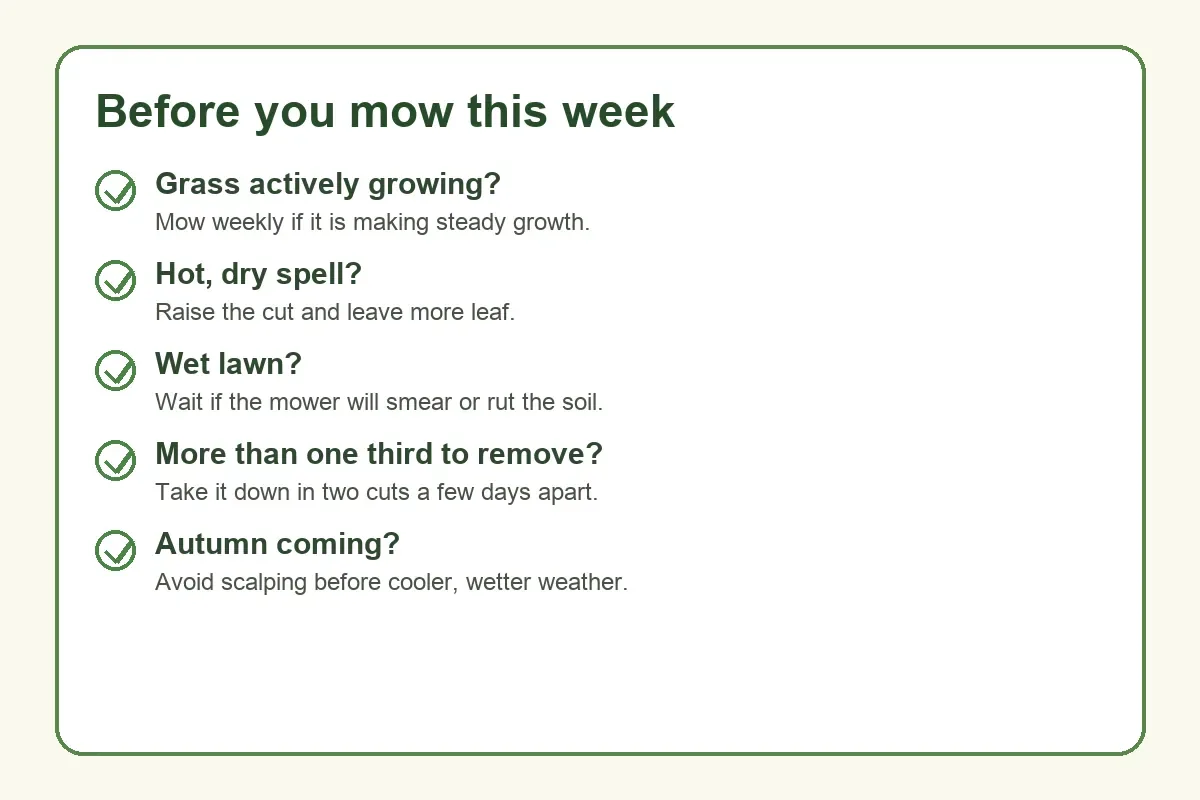
- Check whether the grass is actively growing, not just whether it looks untidy from seed heads or uneven patches.
- Lift the mower height if the lawn has been dry, heavily used or recently stressed.
- Wait after heavy rain if the mower wheels will leave marks.
- Clear toys, stones, hoses and small branches before starting.
- Change direction now and again so the mower does not keep pressing the same tracks into the lawn.
- Trim edges after mowing if you want the garden to look sharper without taking the main lawn too short.
What if the lawn looks brown?
Brown summer grass is often dormant rather than dead. That is especially common after dry weather. If the crowns at soil level are still alive, the lawn can green up again when rain returns. Mowing too short during that period slows the recovery because the plant has less leaf to work with.
If brown areas stay bare after rain, or if birds are pecking heavily at the surface, there may be another issue such as grubs, leatherjackets, compaction, poor soil or heavy thatch. Do not jump straight to treatments. Look at the pattern first. A stripe or corner may be mower damage. Round dry patches may be soil, pet urine or buried rubble. Widespread thinning may need autumn repair rather than another close cut.
When to call a professional
Call a gardener or lawn care professional if the grass is very uneven, too long for your mower, full of moss, badly rutted, or if you are not sure whether to cut, scarify, aerate or reseed. It is also worth asking for help if the garden has slopes, awkward edges or access issues that make mowing unsafe.
A good local gardener should explain what they will cut, what they will leave, and why. They should not promise that one low cut will solve a tired lawn. In late summer, the better job is often a careful cut, tidy edges and a plan for autumn recovery.
Need local lawn help?
If your lawn needs more than a quick mow, Shear Power can help you look for practical local garden maintenance and lawn care help. Use the Shear Power directory to find local support where available, or keep an eye on your area page as more local operators join the network.
If you are a gardener who already does reliable mowing rounds, clear communication and tidy repeat work matter to homeowners. A better local presence can help the right customers understand what you offer before they book.
Useful reference
For general mowing principles, the RHS lawn mowing guide is a sensible place to start: RHS lawn mowing guide.