
Can you still feed a lawn in September in the UK?

When autumn lawn feed helps, when to wait, and the mistakes to avoid.
Quick answer: yes, you can feed a UK lawn in September, but use an autumn lawn feed, not a leftover spring or summer feed. Autumn feed is there to help the grass harden up and build roots before winter. It should go on when the soil is moist, the grass is still growing, and rain is expected soon. If the lawn is bone dry, waterlogged, newly stressed or full of weeds and moss, fix those basics before spreading anything.
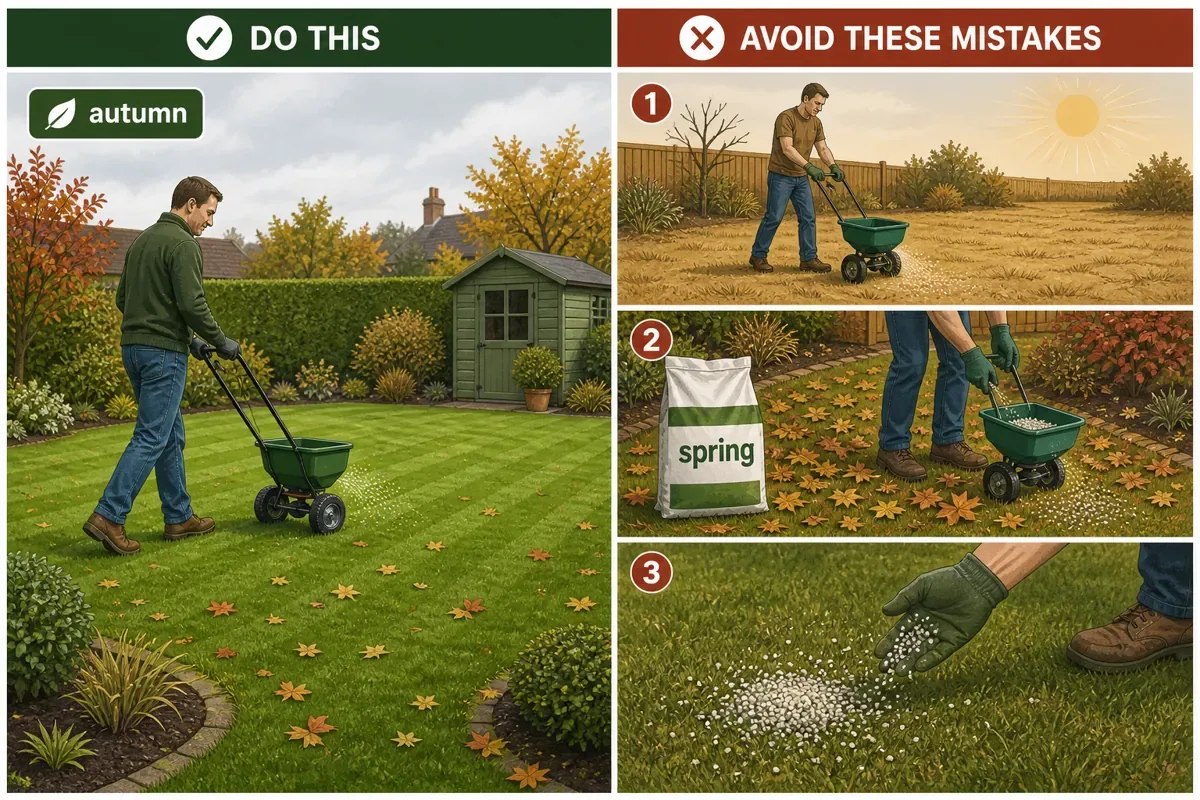
Mistake 1: using spring feed because it is already in the shed
The biggest mistake is treating all lawn feed as the same thing. Spring and summer feeds usually push leafy green growth. That can be useful earlier in the year, when the lawn has time and light to use it. In September, the job changes. The grass still needs support, but you do not want to force lots of soft top growth just as colder nights and wetter weather arrive.
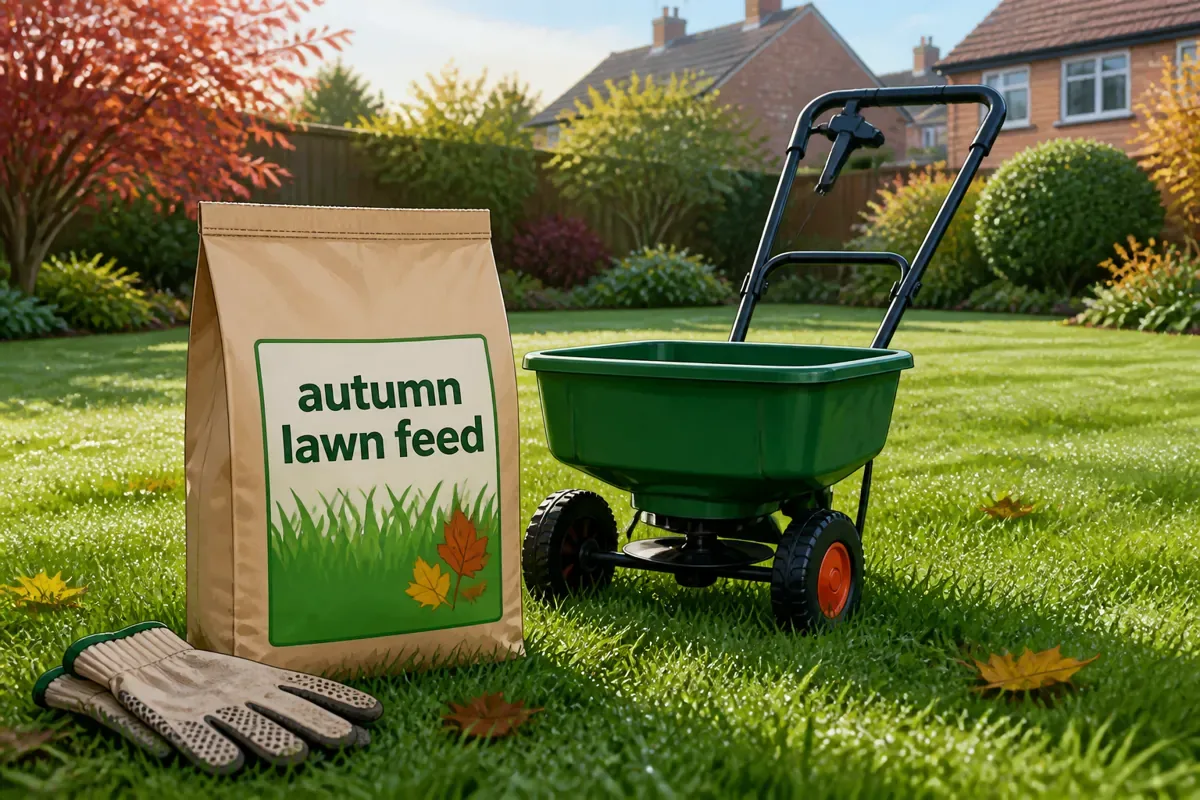
Autumn lawn feed is made for a different purpose. It normally has less nitrogen than a summer feed and is aimed more at root strength and winter hardiness. Always read the label, because products vary. If the packet says spring and summer, do not assume it will be fine just because the grass is green.
Mistake 2: feeding a dry or stressed lawn
September can feel autumnal in one garden and still dry as dust in another. Before you feed, push a screwdriver, hand fork or soil probe into the lawn. If it will not go in easily, the soil is too dry or compacted for a tidy result. Granules can sit on the surface, scorch weak grass, or simply fail to move down to the roots.
A better sequence is to wait for a wetter spell, let the lawn recover from any late summer stress, mow it lightly if needed, then feed when the grass is upright and growing. Do not feed before heavy storms if the product might wash off paths, drains or bare soil. You want steady moisture, not a downpour that carries the feed away.
Mistake 3: guessing the amount
More feed does not mean a better lawn. It usually means stripes, scorch marks, wasted money, and awkward bright patches where the spread was too heavy. Use the rate on the product label. If you do not have a proper spreader, a small hand spreader is usually neater than throwing granules by hand.
| Before you feed | What to check | Why it matters |
|---|---|---|
| Soil moisture | Moist but not waterlogged | Feed needs moisture to move into the soil |
| Weather | Mild, settled, with light rain likely | Reduces scorch and helps uptake |
| Product label | Autumn use, correct rate, safety notes | Products are not interchangeable |
| Lawn condition | Not newly seeded, scorched or scalped unless label allows | Weak grass is easier to damage |
| Edges and hard surfaces | Sweep granules off paving | Keeps paths clean and reduces runoff |
Mistake 4: feeding before dealing with moss, thatch or compaction
If the lawn is thick with moss, spongy underfoot or hard as a pavement, feed alone will not solve it. It may green up the grass that is still there, but the underlying problem remains. In early autumn, many UK lawns benefit from light scarifying, aeration or overseeding, but only when the weather and lawn condition suit the work.
Do not do everything on the same day unless you know the lawn can take it. A tired lawn may need a staged approach: mow lightly, remove leaves, improve air and drainage, repair bare patches, then feed at the right point. If you are unsure, start with the least aggressive step and see how the lawn responds.
Mistake 5: ignoring pets, children and product safety notes
Lawn treatments are not all the same. Some feeds are plain fertiliser. Others combine feed with moss killer or weed treatment. Read the safety instructions before you open the bag, especially if children or pets use the lawn. Keep the product off patios, ponds and borders unless the label says it is safe there. Store leftovers dry, sealed and out of reach.
If you use a combined product, be extra careful with timing and disposal. Do not rake treated moss into borders or compost unless the label says that is allowed. If the label gives a re-entry time for pets or children, follow it rather than guessing.
A simple September feeding plan
- Mow lightly if the grass needs it, but do not scalp it.
- Clear leaves, toys and garden furniture so the feed lands evenly.
- Check the soil is moist and the grass is still growing.
- Choose an autumn lawn feed and read the label from start to finish.
- Measure the lawn area if you can, then set the spreader to the recommended rate.
- Apply evenly, usually in calm weather so the feed does not drift.
- Sweep granules off paving, patios and drains.
- Water in only if the label asks for it or rain is not due.
- Keep people and pets off the lawn for the time stated on the pack.
For a useful seasonal cross-check, the RHS September lawn guidance says autumn feed is for lawns growing poorly and points towards potassium and phosphorus for hardiness and root growth. Product labels still come first, because they tell you how that particular treatment should be used.
When not to feed in September
Skip feeding if the lawn is dormant from drought, waterlogged, frosty, newly treated with another product, or mostly bare soil. Also leave it if you are deliberately encouraging a more wildlife-friendly lawn with clover, daisies and other low plants. In that case, heavy feeding can push the grass harder and work against the look you want.
When to call a professional
Call a gardener or lawn care specialist if the lawn has large bare areas, drainage trouble, heavy moss, repeated dog scorch, or uneven ground that makes mowing difficult. It is also worth asking for help if you are not sure whether to scarify, aerate, overseed or feed first. The right order can save a lot of wasted effort.
If you want local help, Shear Power is building a practical UK directory for homeowners who need reliable garden and lawn care. You can use it to look for local support, compare service scope, and ask clear questions before anyone turns up with a spreader.