
Battery tools versus petrol tools for local rounds
How local gardeners can choose battery or petrol kit without wasting money.
Quick answer: Battery tools can suit a tight local garden round when the lawns are modest, the operator wants less noise, and charging can be managed properly. Petrol tools still make sense for rough, wet, heavy or all-day work. The sensible choice is not about looking modern. It is about whether the kit gets through the actual jobs on your diary without leaving you stranded at 2pm.
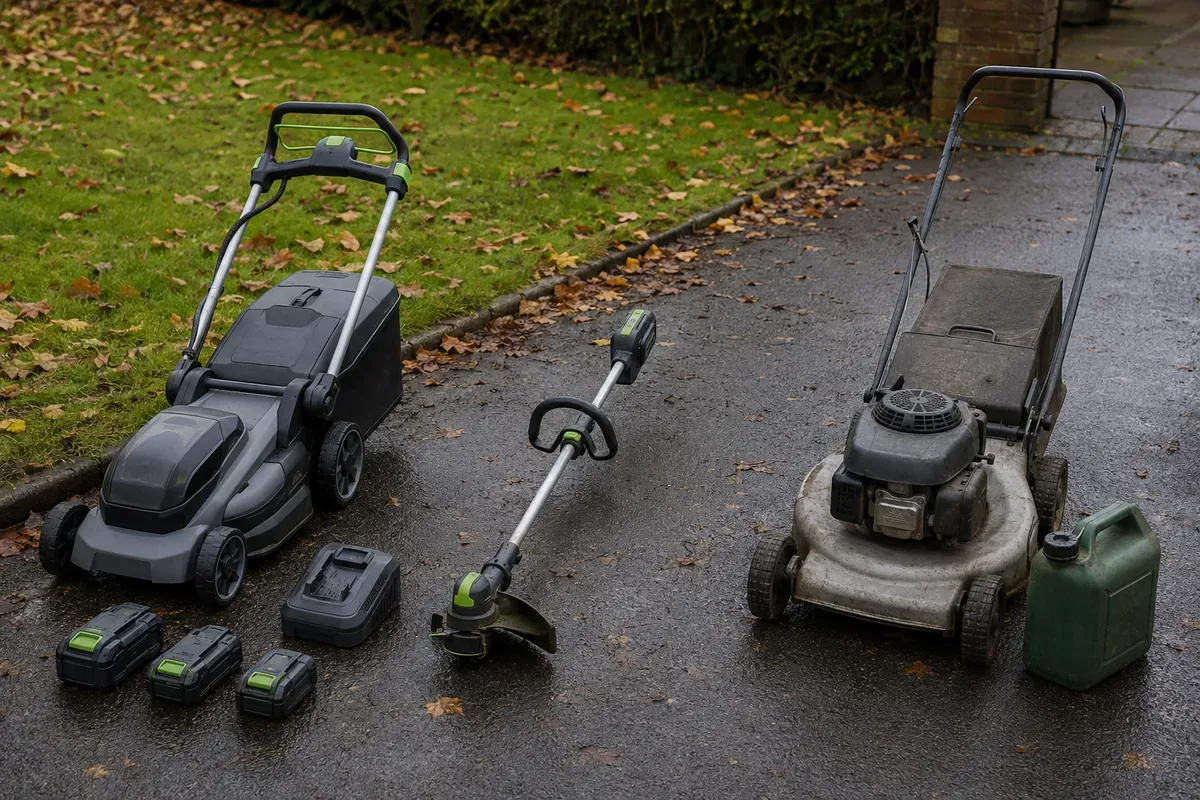
the honest comparison
A new operator can waste a lot of money trying to buy the perfect setup before the round exists. Battery kit is attractive because it is clean, quieter and easier to pack into a family car or estate. Petrol kit is attractive because it has proved itself for years on heavier cuts and longer days. Both arguments can be true.
The problem starts when someone buys the kit for the business they imagine, not the work they actually have. Ten small lawns in one estate are a different day from three overgrown gardens with wet grass, long edges and bags of cuttings. A shiny mower does not fix bad routing or vague service promises.
Early September is a good time to think about this. Grass is still moving after rain, mornings are wetter, and the easy summer rhythm starts to go. A mower that felt fine in July can feel weak when the box fills with damp clippings.
| Decision point | Battery tools | Petrol tools |
|---|---|---|
| Small regular lawns | Often a good fit if batteries last the route | Works, but may be more machine than the job needs |
| Heavy first cuts | Can struggle if grass is wet, long or thick | Usually better suited to tougher cutting days |
| Noise and early calls | Useful in close streets and smaller gardens | Can be harder to use without annoying people nearby |
| Transport | Cleaner and easier to pack if space is tight | Bulkier, smellier and more awkward around fuel |
| Running the whole day | Needs disciplined charging and spare batteries | Needs fuel, maintenance and safe storage habits |
| Customer signal | Looks tidy and modern, but only if the work is good | Looks trade-proven, but still needs clean, careful service |
where battery earns its place
Battery tools are strongest when the round is compact and repeat work keeps lawns under control. If you cut the same gardens every week or fortnight, you are not fighting a jungle each visit. You are maintaining. That is where a battery mower, strimmer and blower can make the day feel lighter.
There is also a customer angle. Many UK gardens are squeezed around cars, bins, side gates and narrow paths. A quieter tool helps on small front lawns close to windows, parked cars and neighbours.
Storage matters too. Not every new gardener has a van on day one. From a car, compact battery kit can be easier to load without petrol smell, oil residue or loose cans rolling about. Batteries still cost money, and cheap batteries are not a business plan.
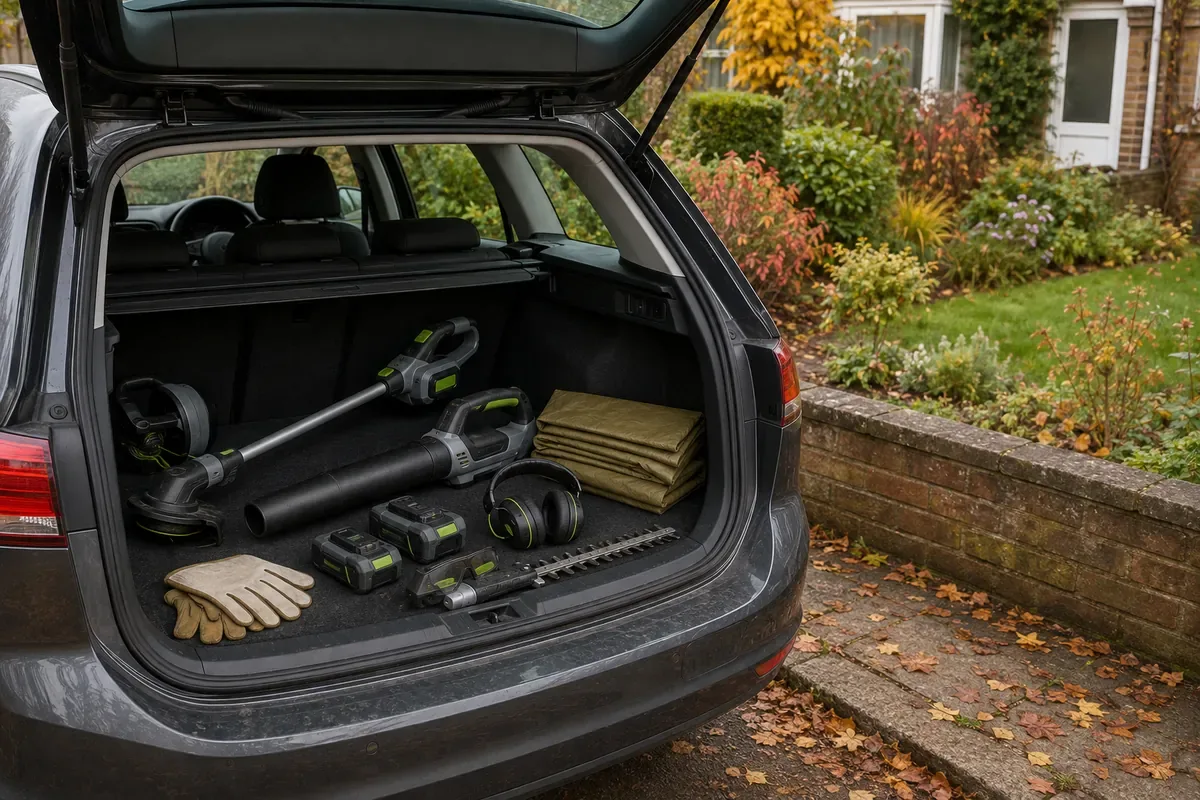
where petrol still makes sense
Petrol still has a place when the work is rougher, longer or less predictable. First cuts after a customer has left the lawn for months are not the same as maintenance cuts. Wet grass, bumpy ground, thick edges and hidden sticks all change the day. If your diary is full of resets and clearance-style lawns, petrol may keep you moving where a light battery setup becomes frustrating.
There is a safety and professionalism point here. Petrol means fuel handling, storage, refuelling and maintenance. Battery means chargers, batteries, damaged casing checks and sensible charging habits. Neither option lets you be casual. The RHS lawn mowing advice reminds gardeners to take care with petrol storage and refuelling, check safety cut-out handles, wear robust footwear and use eye protection where debris may be present. That is homeowner advice, but the trade should be stricter, not looser.
If you are unsure, do not make the mower choice carry the whole business. Borrow, hire or buy used carefully where appropriate. Watch what kind of enquiries you actually get.
a simple route test before buying
Before spending serious money, write down one realistic week. Not the dream version. The wet, slightly annoying version.
- How many lawns are small enough for a compact mower?
- How many are first cuts, rough grass or unknown jobs?
- Can you charge batteries between days without relying on a customer's socket?
- How much boot or van space is left once waste bags, hand tools and PPE are loaded?
- Will noise matter on your most common streets?
- What happens if one battery, charger or mower fails on a busy Thursday?
If most answers point to regular, small, local maintenance, battery deserves a proper look. If the answers point to heavy, uncertain work, keep petrol or heavier commercial kit in the conversation.
when to call or refer to a specialist
If a lawn is steep, full of hidden debris, badly overgrown, waterlogged or mixed with clearance work, treat it as a separate quote. You may need heavier equipment, more than one person, or a specialist clearance operator. If you are new, saying "that is not one for me yet" can be the most professional sentence you say all week.
The same goes for equipment maintenance and electrical safety. Use the manufacturer's instructions, keep chargers and batteries in good condition, and get qualified help where repair or inspection needs it. Guessing with machinery is a bad way to learn.
If you are building a round, the useful question is simple: what kit helps you serve the streets you can reach reliably? Get that right before chasing a bigger menu. If you want your local service to look clearer online as Shear Power grows, keep an eye on the directory and Licensee opportunity rather than copying someone else's setup blindly.
Useful source: the RHS lawn mowing guide has practical safety reminders on mower use, petrol handling, footwear and eye protection: RHS lawn mowing guide.