
A simple lawn recovery plan after heavy rain
What to do when a UK lawn is soaked, soft or puddled after heavy rain.
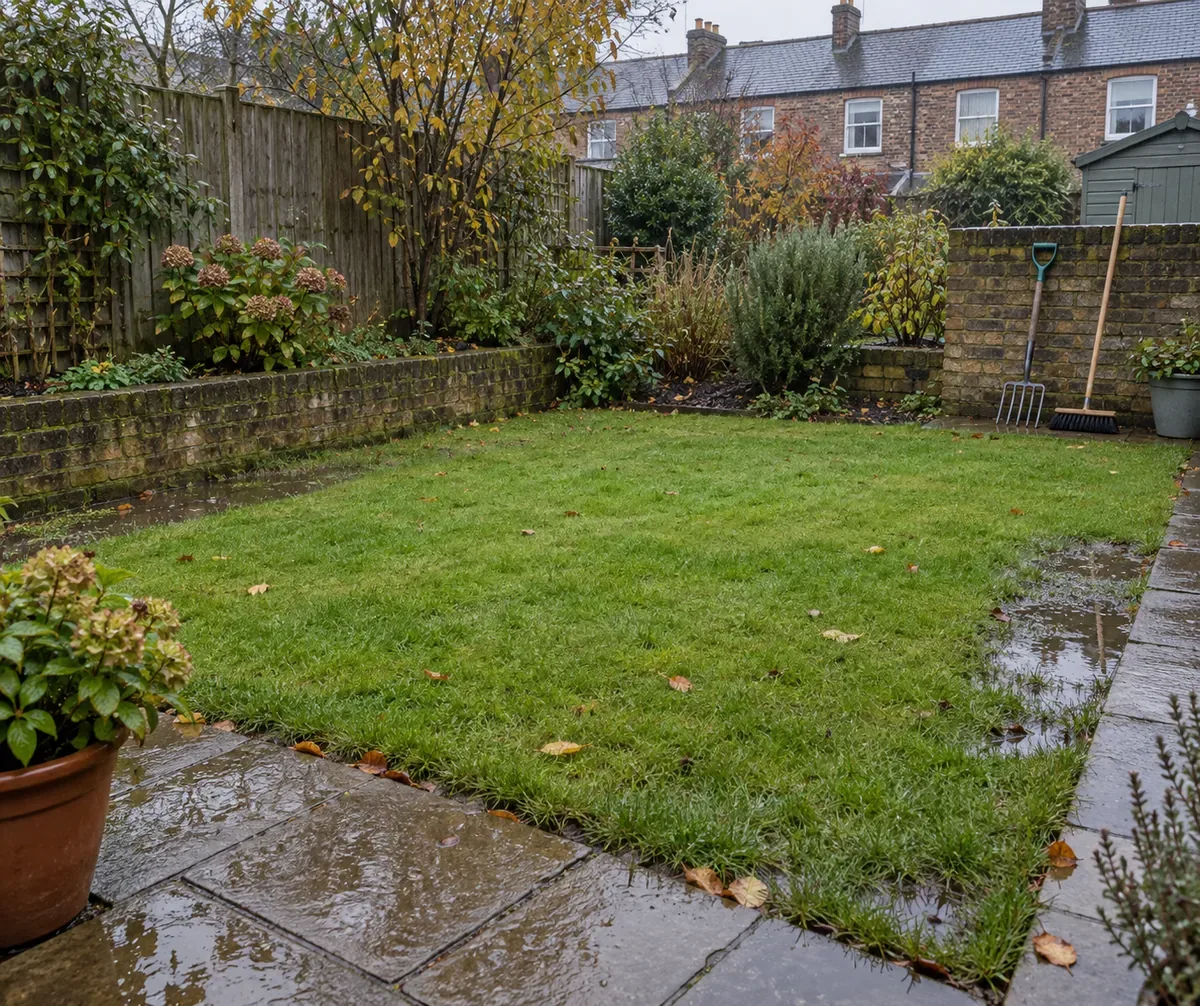
Heavy rain can make a lawn look worse than it is. The grass may be flattened, the edges may hold puddles, and the surface can feel spongy underfoot. The first useful job is not to rush out with seed, feed or a mower. It is to work out whether the lawn needs time to drain, a light recovery tidy, or proper help with compaction and drainage.
Quick answer
If the lawn is only wet on the surface, keep off it for a day or two, clear leaves from drains and edges, and wait for the grass to stand back up before mowing. If water sits for several days, or the same patch floods after every downpour, treat it as a drainage or compaction problem rather than a simple mowing issue.
Step 1: keep weight off the wet grass
Soft soil marks easily. Footprints, wheel ruts and mower tracks can press the air out of the root zone, which makes future waterlogging more likely. If you need to cross the lawn to reach a shed or gate, use stepping boards for short access and lift them afterwards. Do not leave boards down for days, as they can yellow the grass underneath.
Hold off on mowing until the surface has firmed up. A mower on wet ground can tear the grass, smear the soil and leave clumps that block light. If the lawn has grown long, accept a rougher garden for a few days. A clean cut later is better than a chewed lawn now.
Step 2: clear what is trapping water
Before blaming the lawn, check the simple things around it. Clear leaves from gullies, patio channels, borders and the lower edge of the lawn. Sweep muddy silt off hard surfaces so it does not wash straight back onto the grass. If a downpipe spills onto the lawn, or a patio slopes toward it, make a note. That may explain why one corner keeps turning sour after rain.
| What you see | Likely cause | First safe move |
|---|---|---|
| Water sitting near a path | Runoff from paving or a blocked channel | Clear drains and sweep debris away from the edge |
| Squelchy marks where people walk | Compaction on a route line | Keep off it, then aerate when conditions improve |
| Yellow grass after a few wet days | Roots short of air | Let it dry, rake lightly, then plan autumn repair |
| Water returning to the same hollow | Low level or poor drainage | Photograph it after rain and get advice before filling it blindly |
Step 3: do the hand test before repair work
Pick up a small pinch of soil from the surface. If it smears like paste, leave the lawn alone. If it crumbles slightly and the grass springs back after a careful step, you can start light recovery work. This is especially useful in September and October, when the soil is still warm enough for grass to recover but heavy rain can arrive quickly.
Avoid scarifying or raking hard while the ground is wet. You will pull out healthy grass and open the surface to more mud. A light rake to remove leaves is fine. A full renovation should wait until the lawn can take the work.
Step 4: aerate only when it will help
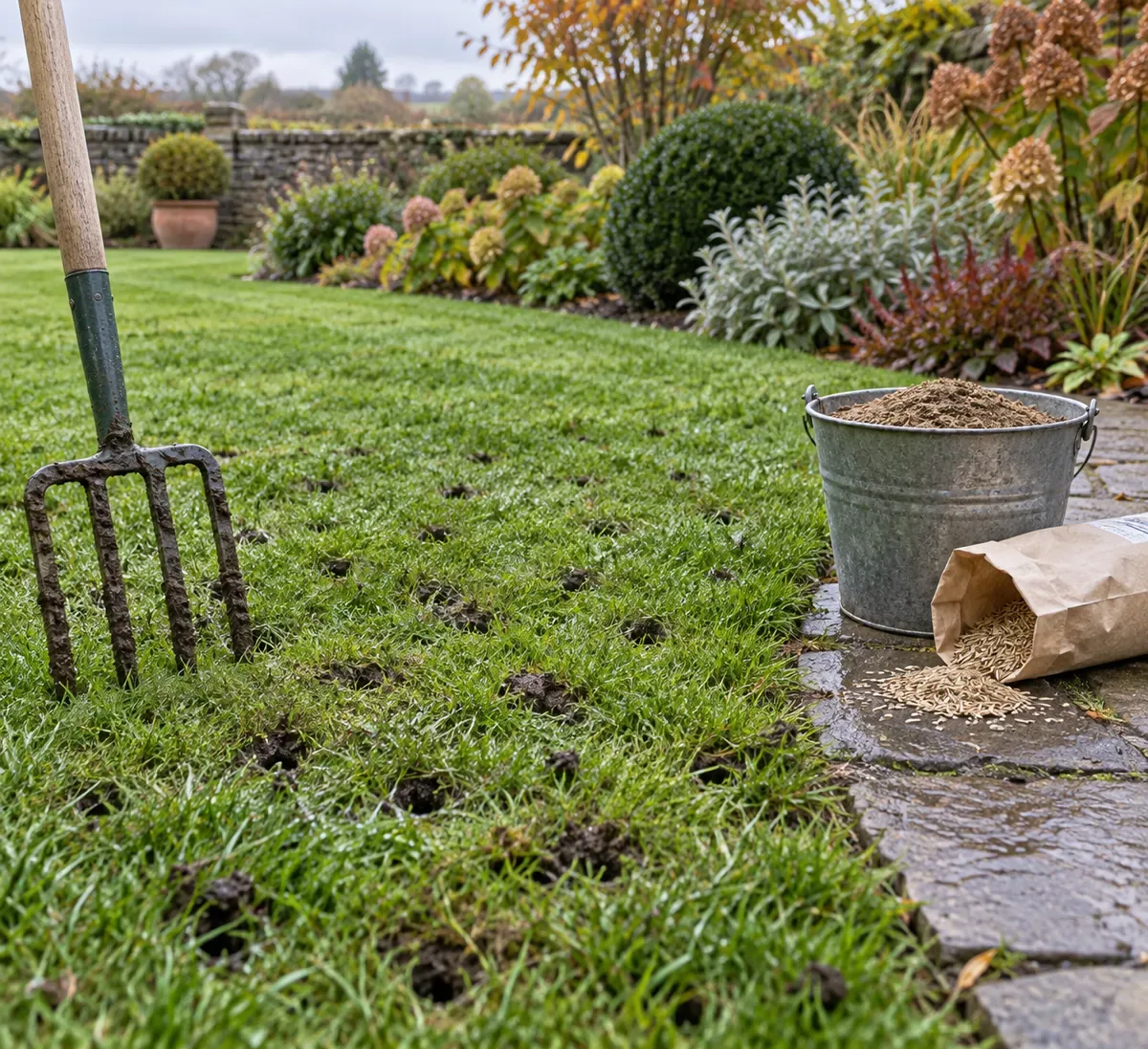
For a lawn that keeps holding water, aeration is often the sensible autumn job. The RHS advises hollow-tine aeration for clay or waterlogged soil because it removes plugs and opens deeper holes for air and moisture movement. Those plugs should be swept up, then a free-draining top dressing can be brushed into the holes.
For a small area, a garden fork can help as a light measure, but it is not the same as proper hollow-tining. Push the fork in, ease it slightly, and move on. Do not churn the lawn. The aim is to open channels, not turn the garden into a border.
Step 5: repair thin patches after the ground settles
Thin patches are easier to judge once the lawn has drained. Rake out dead material, prick the surface lightly, add a thin layer of suitable top dressing, then overseed if the weather is still mild enough. Keep the seed damp, not soaked. If more heavy rain is forecast, wait. Seed washed into the path is wasted money.
- Take photos while the lawn is wet so you know where the water sits.
- Keep people, pets and mowers off the softest areas.
- Clear leaves and blocked edges first.
- Wait for the soil to pass the hand test before raking, aerating or seeding.
- Repair small thin patches when the surface is firm and mild weather is forecast.
When to call a professional
Call someone in if water sits for more than a few days, the lawn smells sour, the same route keeps turning to mud, or the garden slopes toward the house. Also get help before installing drains, changing levels or adding large amounts of soil. Those jobs can affect paving, boundaries and where water goes next.
A good lawn visit should not start with a hard sell. It should start with a look at levels, shade, soil, foot traffic and where water enters the lawn. If the issue is small, you may only need aeration and a repair plan. If the drainage is poor, you need a clearer diagnosis before spending money on seed or feed.
Book practical help without guesswork
If your lawn keeps struggling after heavy rain, Shear Power can help you think through the next sensible step. Send a few photos after rainfall, one wider garden photo, and a note about how long the water sits. That gives a gardener enough context to suggest whether you need a tidy, aeration, patch repair or a more serious drainage conversation.
For background reading, the RHS has useful guidance on waterlogged lawns and autumn lawn care. Use it as a guide, then match the advice to what is happening in your own garden.